
Published on May 6, 2026
The Era of Regeneration: Why K-Beauty Exchanged Fillers for Cellular Intelligence
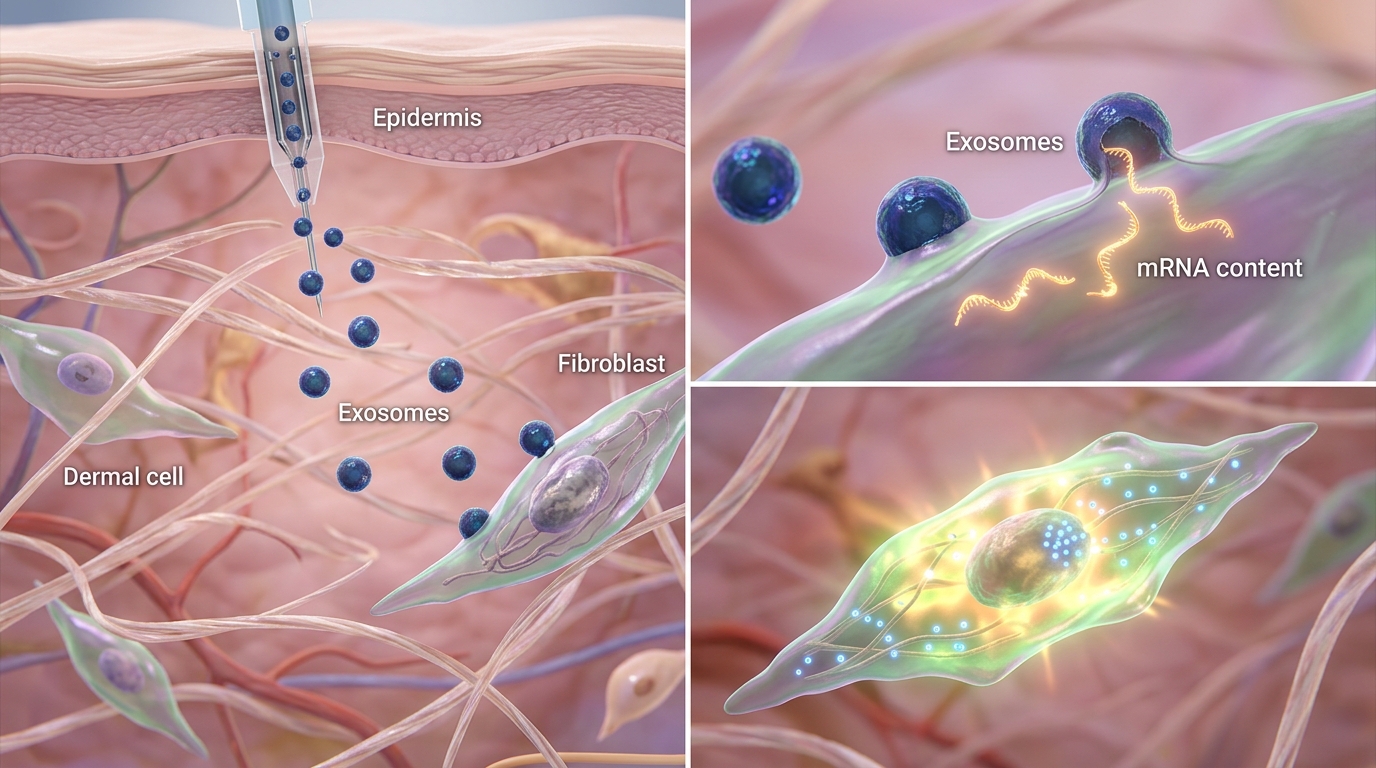
For years, anti-aging solutions were mainly based on volume: filling wrinkles and freezing muscles. But South Korea, a global leader in cosmetic innovation, has changed this approach. The new frontier of beauty is no longer about “hiding” age, but about helping the skin function in a healthier and more revitalized way.
Welcome to the era of Regenerative Aesthetics.
The science: what are exosomes?
If you have never heard this word before, get ready; it is at the center of one of the biggest dermatological revolutions of the decade.
Exosomes can be compared to “intelligent messengers” or tiny “biological letters.” They are microscopic extracellular vesicles that carry proteins, lipids, and genetic material (RNA), allowing communication between cells.
The biological difference
Unlike hyaluronic acid fillers, which physically occupy space to create volume, exosomes work through cellular communication. They send signals that help stimulate the skin’s natural processes, including collagen, elastin, and endogenous hyaluronic acid production.
Rather than simply masking signs of aging, this technology aims to optimize cellular function and support the skin’s natural regenerative mechanisms.
Why is this considered “regenerative”?
The shift from corrective aesthetics to biological aesthetics represents a true change in paradigm.
Traditional aesthetics
Often focused on immediate results, using synthetic volume to soften signs of aging; sometimes at the expense of natural facial harmony.
Regenerative aesthetics (K-Beauty)
Focused on skin barrier health, skin quality, and dermal density. The goal is to stimulate the body’s natural biological mechanisms to improve firmness, texture, and radiance.
The result? Skin that looks healthy, rested, luminous, and naturally firm.
Clinical application: the power of Drug Delivery
Because exosomes are extremely delicate structures, the way they are delivered into the skin is essential.
In clinical practice, we use Drug Delivery strategies combined with microneedling. By creating microchannels in the skin, active ingredients can penetrate deeper layers and reach fibroblast-rich areas, helping optimize the skin’s regenerative response.
What science says
As a biologist and cosmetology specialist, I base my practice on scientific evidence and current research:
Exosomes in Skin Photoaging: Biological Functions and Therapeutic Opportunities (2023): explores the role of exosomes in fighting photoaging and stimulating fibroblasts.
Human Adipose-Derived Mesenchymal Stem Cell-Derived Exosomes (2025): highlights the regenerative and collagen-stimulating potential of stem cell-derived exosomes.
The Efficacy of Combined Microneedling and Topical Poly-d,l-lactic Acid (Juvelook) Application for Facial Pore Reduction and Skin Texture Improvement (2021): demonstrates how combining microneedling with advanced Drug Delivery techniques can significantly enhance clinical results.
Specialist’s insight
As a biologist and cosmetology specialist, I continuously follow scientific advancements in aesthetics and dermatology. And science is clear: the future of beauty is not about changing who you are, but about providing your cells with the right stimulation to support healthier, firmer, and revitalized skin.
Would you like to learn more about exosome technology? Join our Instagram or Facebook community for exclusive content about skin health and regenerative aesthetics. You can also schedule a personalized consultation to begin your regenerative skin protocol.