
Published on May 5, 2026
Understanding Lipedema: Why Your Body Might Be Changing and What You Can Do
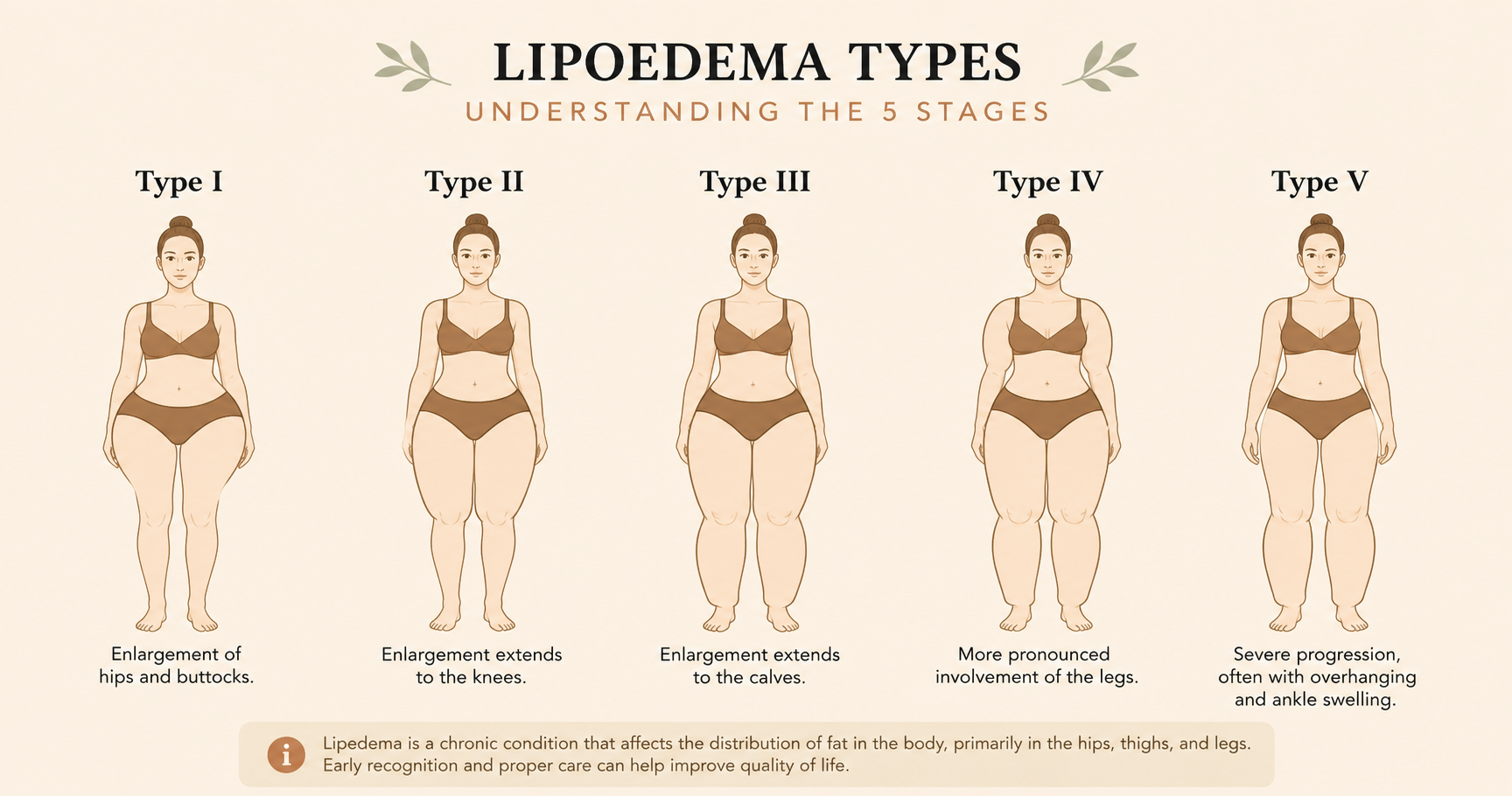
If you’ve noticed that your legs or arms seem to be gaining weight out of proportion with the rest of your body and that no amount of dieting or exercise seems to change it you might be dealing with a condition called Lipedema.
Lipedema is a chronic, progressive disorder that almost exclusively affects women. It is often misunderstood or misdiagnosed as simple obesity, but recent research from experts in dermatology highlights that it is a complex medical condition requiring specialized care (Dal'Forno-Dini et al., 2026).
What Exactly is Lipedema?
Lipedema is characterized by a symmetrical, disproportionate accumulation of fat, primarily in the lower extremities (legs, hips, and buttocks) and sometimes the arms (Nassib et al., 2024). Unlike typical weight gain, this fat is often "resistant", meaning it doesn't respond to standard calorie restriction or gym routines.
Common symptoms include:
Sensations of heaviness: Your limbs may feel weighted down.
Tenderness and pain: The affected areas are often sensitive to touch.
Easy bruising: The microvasculature (small blood vessels) in these areas can be fragile.
Discomfort: Physical discomfort that can impact daily activity.
Why Does it Happen?
Scientists are still working to uncover the exact cause, but research suggests a combination of genetic, hormonal, and microvascular factors (Nassib et al., 2024). Because it almost always appears during periods of hormonal shift; like puberty, pregnancy, or menopause, hormones are believed to play a significant role.
The Lymphatic Connection
One of the most important findings in recent studies is the link between Lipedema and your lymphatic system. While Lipedema is not a "lymphatic disease" at its start, the excess fat tissue can eventually overwhelm your lymph vessels.
As the condition progresses, the growing fat cells can compress these vessels, leading to impaired lymphatic drainage (Nassib et al., 2024). This causes fluid to build up in the tissues, a complication known as lipo-lymphedema. This is why many women notice that their swelling gets worse throughout the day or in hot weather.
Managing the Condition
While there is currently no "cure," the focus of modern medicine is on symptom management and improving quality of life. Current therapeutic strategies include:
Manual Lymphatic Drainage (MLD): This is a specialized, gentle massage technique designed to stimulate the flow of lymph fluid. It helps move excess fluid away from congested areas, which can significantly reduce the "heavy" feeling and pain (Nassib et al., 2024).
Compression Therapy: Using medical-grade compression garments helps support the tissues and assists the lymphatic system in moving fluid out of the limbs.
Specialized Diets: Anti-inflammatory eating patterns can help manage the systemic inflammation and tissue swelling associated with the condition (Dal'Forno-Dini et al., 2026).
Psychological Support: Because Lipedema can cause significant emotional distress, mental health support is considered a vital part of a multidisciplinary care team (Nassib et al., 2024).
Surgical Options: In advanced cases, lymph-sparing liposuction may be used to remove diseased fat while carefully protecting the underlying lymphatic vessels.
The Importance of Awareness
One of the biggest hurdles for women is getting a correct diagnosis. Currently, diagnosis is "clinical," meaning a doctor identifies it through a physical exam and medical history.
Unfortunately, there are no specific biomarkers or imaging tests yet that can definitively diagnose Lipedema on their own (Dal'Forno-Dini et al., 2026).
If you suspect you have Lipedema, know that your symptoms are real. Seeking out a skilled team is the best way to manage the condition and protect your lymphatic health.
References
Dal'Forno-Dini, T., Birck, M. S., Saalfeld, R. M., Macedo, C. L. D., & Bagatin, E. (2026). Lipedema: pathophysiological insights and therapeutic strategies – An update for dermatologists. Anais Brasileiros de Dermatologia, 101(1). https://doi.org/10.1016/j.abd.2025.501270 Cited by: 0
Nassib, A. K., El-Khalawany, M., & El-Komy, M. (2024). Lipedema: pathophysiological insights and therapeutic strategies – An update for dermatologists. Cureus, 16(1). https://doi.org/10.7759/cureus.51862